Structural Drying and Dehumidification in Tigard, OR
Air movers, dehumidifiers and daily meter readings take moisture out of framing, subfloors and hardwood. The equipment stays until the numbers reach the dry target, not until the calendar says so.
(888) 373-8814Start the drying plan in Tigard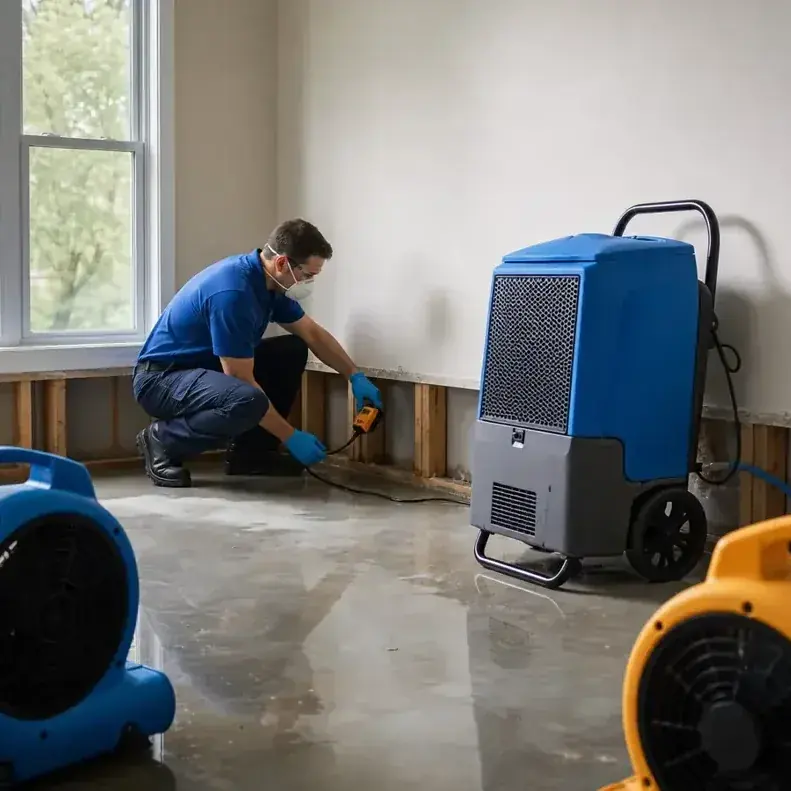
First steps for structural drying and dehumidification
- Leave the gear on. Overnight running is part of the plan.
- Keep doors closed. Closed doors help the dehumidifiers work.
- Do not move equipment. Unplugging or relocating gear breaks the drying pattern.
- Notice the humidity. Fogged windows or a damp feel mean the drying is not done.
Pumping gets the visible water out, but the structure keeps holding moisture long after. Structural drying is the part that brings framing, subfloors and finishes back to their normal moisture content, and the readings are what prove it. Without them, a floor can look dry and still be wet inside. Skipping this step is how damp subfloors turn into stained, swollen or musty floors later.
Why readings matter here
Houses in this area come from many eras. About 44 percent were built from 1970 to 1989 and 33 percent from 1990 to 2009, so framing, subfloors and finishes vary from one street to the next. Wet Oregon winters make natural drying slow, which is why meters, not guesses, decide when a room is done. Hardwood, laminate and tile over plywood each release moisture at their own pace.
- Air movers push dry air across wet surfaces to speed evaporation.
- Dehumidifiers pull the released moisture out of the air before it settles back.
- Meters read wood, drywall and subfloor each visit and compare them to a dry reference.
- Mats and desiccant units handle thick hardwood and Class 4 materials.
What does structural drying and dehumidification cost in Tigard, OR?
Structural drying usually costs $1,000 to $2,500 for one room, $2,500 to $5,000 for a floor of the home, and $4,500 to $7,500 for hardwood or Class 4 jobs. Dense materials raise the total.
One room
$1,000 to $2,500Air movers and an LGR dehumidifier set and read
A floor
$2,500 to $5,000Several rooms dried with daily readings
Hardwood or Class 4
$4,500 to $7,500Floor mats, desiccant units and longer runs
Ranges are typical, not a quote: the water category, square footage, material class and how fast drying started move the number most. Run the water damage cost calculator for a closer range.
What happens each visit
The crew checks every wet surface, adjusts the equipment and logs the numbers. When a reading stalls, the gear moves or more material is opened. Work that follows water extraction or a burst pipe loss usually ends here, with the file handed to the adjuster. Equipment placement changes as the readings change, so a room that dries unevenly gets extra airflow where the numbers lag.
How structural drying and dehumidification work is held to a standard
Rapid local response
Dispatch runs 24/7, and active water anywhere from Lake Grove to Old Town is treated as urgent, holidays included.
IICRC S500 drying standard
Air movers and LGR dehumidifiers are sized to each room's evaporation load and stay in place until the readings say dry.
Claim-ready documentation
Moisture maps, daily psychrometric logs and timestamped photos are taken before anything wet is removed.
Local water know-how
Crawl spaces under fir-shaded roofs, daylight basements on hillside lots and pipes exposed in an ice storm shape every plan.
Structural drying and dehumidification, district by district
24/7 dispatch reaches every street in the coverage map, day or night.
Drying crews work across the city, from houses near Washington Square and Hall Boulevard to townhomes and apartments on Bull Mountain and in River Terrace, in ZIP codes 97223 and 97224.
The same service nearby: structural drying and dehumidification in Lake Oswego, Tualatin, West Linn.
Related water damage services in Tigard
Water Extraction and Removal in Tigard
Standing water pulled with truck-mounted and portable units before pad, drywall and framing soak it up.
See the details ›Burst Pipe Water Damage in Tigard
Failed supply pipes inside walls and ceilings stopped at the valve, extracted and dried.
See the details ›Basement Flooding Cleanup in Tigard
Daylight basements and lower levels extracted, opened where needed and dried to a reading.
See the details ›Structural Drying and Dehumidification in Lake Oswego
Framing, subfloor and hardwood dried with LGR and desiccant units to a dry reference.
See the details ›Water damage restoration in Tigard
Every water service for Tigard, 24/7.
See the details ›Structural Drying and Dehumidification questions
How do crews know when a room is dry?
Meters read the moisture content of wood, drywall and subfloor, and the numbers are compared with a dry reference from an unaffected area. Equipment stays until the readings match.
Why is the dehumidifier running when nothing looks wet?
Moisture inside framing and under floors cannot be seen. The dehumidifier pulls it from the air so more keeps moving out of the materials.
Why is the equipment so loud?
Air movers push air across wet surfaces and dehumidifiers condense moisture, so both run steadily. The noise ends when readings reach target.
Can wet hardwood be dried in place?
Often. Floor mats pull moisture upward, and desiccant units help with thick boards, though badly cupped boards may be replaced afterward.
Does damp weather slow drying?
Yes. Damp outdoor air makes natural drying slow, so a closed building with dehumidifiers works better than opened windows.
Do the drying records matter for insurance?
Daily logs and photos show the adjuster why the equipment stayed and when it came out, which supports the mitigation bill.
Dry it right the first time
The drying team sets equipment from the readings, logs every visit and removes it only when the numbers reach target.
(888) 373-8814Book the drying plan