Structural Drying in West Linn, OR
Surfaces can feel dry while framing and subfloor still hold water. The crew places air movers and dehumidifiers to a plan, takes moisture readings each day and keeps drying until the structure meets a dry target.
(888) 373-8814Dry out my home to a reading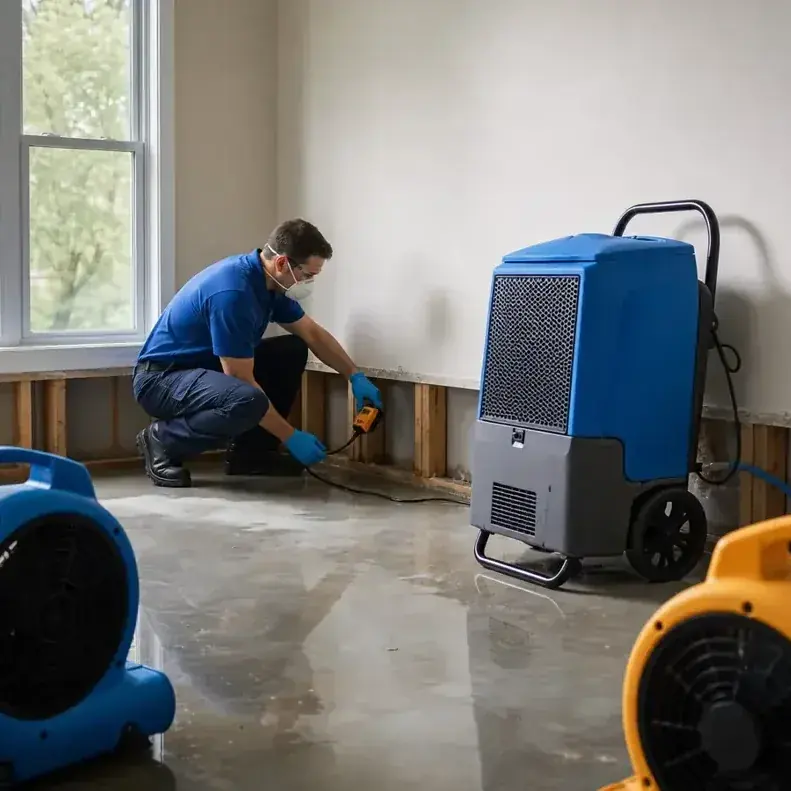
First steps for structural drying and dehumidification
- Leave equipment alone. Keep air movers and dehumidifiers running.
- Close the doors. Shut doors and windows in the drying zone.
- Expect noise and heat. The units run all day and warm the room.
- Watch for odors. A musty smell after days of drying needs another look.
Drying is where a water job is actually finished. In West Linn the crew aims at a number on a meter, not a feeling in the room, and equipment stays until the framing reaches it.
Why the wet season matters
About 75 percent of the city's rain falls between October and March, the same stretch when winter storms can leave pipes and roofs leaking. Houses are closed up and the air is already damp, so drying has to be controlled and measured.
- Air movers move air across wet surfaces so moisture leaves the material.
- LGR dehumidifiers pull that moisture out of the air before it settles somewhere else.
- Desiccant units handle dense or cold materials that low-humidity machines struggle with.
- Meters and cameras show where the water actually sits, behind the paint and under the floor.
What does structural drying and dehumidification cost in West Linn, OR?
Structural drying usually costs about $1,000 to $7,500, set by how many rooms are wet, what the floors are made of, how many machines are needed and how many days they run.
One room
$1,000 to $2,500Air movers and an LGR unit for three to four days.
Several rooms
$2,500 to $5,000A floor of the home with daily readings.
Hardwood or Class 4
$4,500 to $7,500Floor mats, desiccant units and longer drying.
Ranges are typical, not a quote: the water category, square footage, material class and how fast drying started move the number most. Run the water damage cost calculator for a closer range.
How the plan is built
The crew maps wet areas, sets equipment by room size and water class, and adjusts it each day as readings fall. Wet insulation and baseboards that cannot dry are removed so air can reach the framing, and hardwood may get floor mats to pull moisture out of the boards.
When drying is finished
Drying ends when readings match an unaffected reference in the same house, and the logs go to the adjuster as proof. Water comes out first through water extraction, and rebuilding starts only after the structure is dry. A reading above the reference means the equipment stays.
How structural drying and dehumidification work is held to a standard
Rapid local response
Dispatch runs 24/7, and active water anywhere from Lake Grove to Old Town is treated as urgent, holidays included.
IICRC S500 drying standard
Air movers and LGR dehumidifiers are sized to each room's evaporation load and stay in place until the readings say dry.
Claim-ready documentation
Moisture maps, daily psychrometric logs and timestamped photos are taken before anything wet is removed.
Local water know-how
Crawl spaces under fir-shaded roofs, daylight basements on hillside lots and pipes exposed in an ice storm shape every plan.
Structural drying and dehumidification, district by district
24/7 dispatch reaches every street in the coverage map, day or night.
Drying crews work across ZIP 97068, including Willamette, Bolton, Robinwood, Sunset, Marylhurst, Rosemont Summit, Skyline Ridge, Parker Crest and Savanna Oaks, and along Highway 43 and Willamette Drive.
The same service nearby: structural drying and dehumidification in Lake Oswego, Gladstone, Milwaukie.
Related water damage services in West Linn
Water Extraction and Removal in West Linn
Standing water pulled with truck-mounted and portable units before pad, drywall and framing soak it up.
See the details ›Basement Flooding Cleanup in West Linn
Daylight basements and lower levels extracted, opened where needed and dried to a reading.
See the details ›Crawl Space Water Removal in West Linn
Water pooled on the vapor barrier pumped out, sagging insulation pulled and joists dried.
See the details ›Structural Drying and Dehumidification in Lake Oswego
Framing, subfloor and hardwood dried with LGR and desiccant units to a dry reference.
See the details ›Water damage restoration in West Linn
Every water service for West Linn, 24/7.
See the details ›Structural Drying and Dehumidification questions
How long does structural drying take?
Most jobs run three to five days, but dense materials, hardwood and deep water can need longer. Readings, not the calendar, decide when it ends.
Why do the machines run so long?
Water hides in framing and subfloor, and it leaves slowly. Dehumidifiers keep the air dry enough to draw it out, and stopping early lets damp settle back in.
Can floors dry without being removed?
Often. Floor mats and heat can pull moisture from hardwood in place, but boards that have cupped badly or soaked through may need replacing.
Does drying prevent mold?
Drying quickly removes the moisture that mold needs, which is why materials are dried within the first 24 to 48 hours whenever possible.
What is a dry target?
It is a moisture reading taken from unaffected materials in the same home. When wet areas read the same, the structure is considered dry. See sewage backup cleanup for jobs that need cleaning first.
Dry the structure, not just the surface
Damp that stays in framing and subfloor causes trouble later, so call dispatch and the crew sets equipment and logs the readings until the home is dry.
(888) 373-8814Start my home dry-out