Crawl Space Water Removal in Tigard, OR
Where a home has a crawl space, water under the floor is pumped out, soaked insulation is removed and the framing above is dried, because wet joists quietly damage the rooms overhead.
(888) 373-8814Send a crew under the floor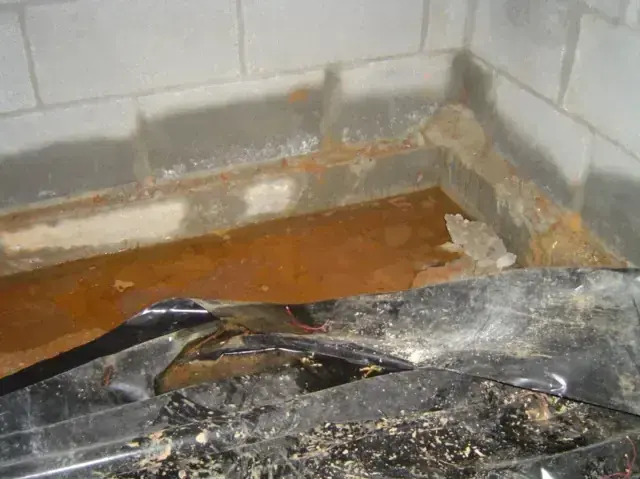
First steps for crawl space water removal
- Find the source. Shut off the main if a pipe is leaking, and keep out of water that touches wiring.
- Skip the shop vac. A household vacuum is not rated for standing water, so leave pumping to the crew.
- Mind the odor. A musty smell after rain points to trapped moisture, even when nothing looks wet.
- Photograph the space. Take dated pictures of the water, the insulation and any stored items before cleanup.
Water sitting under a floor never shows up on the surface right away. It soaks insulation, wets the joists and sends moisture up into the rooms above, which is why crawl space work starts with pumps and ends with framing readings. Local homes that have one see it after heavy rain, a failed pipe or a drain that backs up.
How the water gets out
Submersible pumps drop to the lowest point and drain the standing water, and the crew works in stages so nothing is disturbed more than it needs to be.
- Pumping drains the standing water to a discharge point well away from the house.
- Insulation that has absorbed water sags, loses its value and holds moisture against the subfloor, so it is cut out and bagged.
- Sheeting that is torn or holding water is lifted so the surface under it can be checked and dried.
- Framing is metered joist by joist, and wet wood gets dedicated airflow until the readings come down.
What does crawl space water removal cost in Tigard, OR?
Crawl space work usually runs $1,500 to $3,000 for a small pipe leak, $3,000 to $5,500 for a whole crawl space, and $5,000 to $8,000 when ground water or sewage is involved. Longer drying and removal push a job toward the top.
Small leak
$1,500 to $3,000Part of the space pumped, damp insulation removed, framing dried
Whole space
$3,000 to $5,500Standing water cleared, insulation and barrier out, full drying
Ground water or sewage
$5,000 to $8,000Contaminated water, with cleaning, treatment and longer drying
Ranges are typical, not a quote: the water category, square footage, material class and how fast drying started move the number most. Run the water damage cost calculator for a closer range.
Wet weather and the crawl space
The wet season is the usual trigger. A December 2025 storm put 2.40 inches of rain on Bull Mountain, and the Fanno Creek Trail under Scholls Ferry Road floods naturally in winter. Rain at that level can overload gutters and drains around a house. Whether a given home has a crawl space is a question for the home itself, since foundation types vary, but where one exists, water that finds its way in tends to linger unless it is pumped out.
Drying the space for good
After the water is out, air movers and dehumidifiers dry what remains while the crew watches the readings. A musty odor is an early sign that moisture is lingering, and mold becomes a risk past the 24 to 48 hour mark, so the plan follows structural drying with checks every day until the framing reaches target.
How crawl space water removal work is held to a standard
Rapid local response
Dispatch runs 24/7, and active water anywhere from Lake Grove to Old Town is treated as urgent, holidays included.
IICRC S500 drying standard
Air movers and LGR dehumidifiers are sized to each room's evaporation load and stay in place until the readings say dry.
Claim-ready documentation
Moisture maps, daily psychrometric logs and timestamped photos are taken before anything wet is removed.
Local water know-how
Crawl spaces under fir-shaded roofs, daylight basements on hillside lots and pipes exposed in an ice storm shape every plan.
Crawl space water removal, district by district
24/7 dispatch reaches every street in the coverage map, day or night.
Crews work throughout the city for crawl space water, including the streets around Washington Square, Hall Boulevard and Boones Ferry Road, and the newer homes of River Terrace, in ZIP codes 97223 and 97224.
The same service nearby: crawl space water removal in Lake Oswego, Tualatin, West Linn.
Related water damage services in Tigard
Water Extraction and Removal in Tigard
Standing water pulled with truck-mounted and portable units before pad, drywall and framing soak it up.
See the details ›Basement Flooding Cleanup in Tigard
Daylight basements and lower levels extracted, opened where needed and dried to a reading.
See the details ›Structural Drying and Dehumidification in Tigard
Framing, subfloor and hardwood dried with LGR and desiccant units to a dry reference.
See the details ›Crawl Space Water Removal in Lake Oswego
Water pooled on the vapor barrier pumped out, sagging insulation pulled and joists dried.
See the details ›Water damage restoration in Tigard
Every water service for Tigard, 24/7.
See the details ›Crawl Space Water Removal questions
Is standing water under a house dangerous?
It can be. Water near wiring or a furnace is a shock risk, and ground water may carry bacteria, so the space is assessed before anyone goes in.
Can wet insulation be saved?
Rarely. Insulation that has absorbed water loses its shape and stays wet for a long time, so it is usually cut out and replaced after the floor above is dry.
What does a vapor barrier do after a flood?
It keeps ground moisture from rising, but a torn or water-covered sheet traps wet conditions. The sheet is lifted, the surface checked and the barrier repaired or replaced.
How is a crawl space dried after pumping?
Air movers and dehumidifiers run, and moisture readings on the joists and subfloor decide when to stop. Cold, damp weather slows the process down.
Does rain alone cause crawl space water?
Heavy rain can, along with a failed pipe or a drain problem. After a storm like the one in December 2025, a musty smell or a soft floor is a reason to have the space checked.
When does it count as sewage?
Water that smells foul or follows a drain backup is treated as Category 3, which means sewage backup cleanup with removal, cleaning and treatment rather than drying alone.
Dry the framing before it warps
Pumps first, then insulation and sheeting, then daily readings, so the joists and subfloor come back to a dry target.
(888) 373-8814Start the pump-down