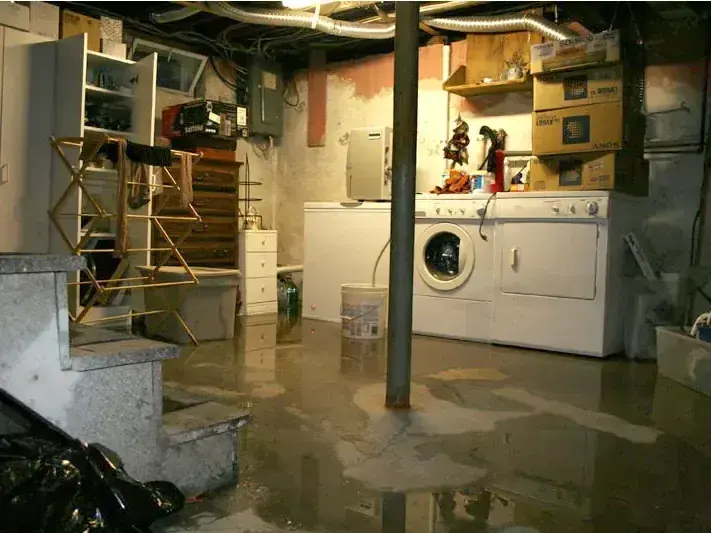
In the February 1996 flood, high water in the Tualatin and Willamette rivers kept West Linn creeks from draining, and several of them backed up and flooded nearby ground. That same pattern is one reason the city says flood risk reaches beyond the mapped floodplain.
Key takeaways
- The February 1996 flood was the largest to affect the city, and high rivers kept tributaries from draining.
- The city says flood risk also exists outside mapped floodplains, from small streams and from local drainage where open ditches enter culverts or storm sewers.
- For high-risk areas the city advises raising the furnace, water heater and electric panel and considering check valves so floodwater cannot back up into drains.
- Water that comes back through a drain is treated as contaminated, so removal and cleaning come before drying.
- Self-service sand and sandbags are kept at Willamette Park and behind the old Bolton fire station on Failing Street.
How a creek backs up when the rivers are high
A creek drains downhill into a bigger river. When the bigger river is already full, the creek has nowhere to go and the water spreads back along its banks.
That is what happened in February 1996. High water in the Tualatin River and the Willamette River kept tributaries from draining, and several creeks backed up and flooded locally.
The city samples Trillium Creek, Johnson Creek and Tanner Creek, which sit at the bottom of three large drainages. The Johnson Creek here is a West Linn creek, separate from any other creek of that name.
The pattern repeats on a smaller scale in any storm that fills a creek faster than the river below can take the flow.
Flood risk outside the mapped floodplain
The city's flood management area covers land that went under in 1996 as well as FEMA mapped flood areas. The city also says risk exists beyond those maps, from small streams and from local drainage where open ditches enter culverts or storm sewers.
A map shows where flooding has been mapped, not every place water can collect.
The hazard plan says about 3 percent of residents live in the floodplain. It lists homes near the Tualatin River floodplain by Swiftshore Avenue, Fields Bridge Park and Willamette Park, and along the Willamette River by River Street, Nixon Avenue, Calaroga Court and Cedar Oak Park.
The stormwater system behind the creeks
Stormwater from curb inlets and catch basins drains to local streams. The city maintains about 2,500 catch basins, 40 ponds and 54 underground detention tanks, and about 42 percent of its land is covered by hard surfaces such as streets, roofs and sidewalks.
Hard surfaces shed water quickly, and that water has to go somewhere. In a long storm a lower level can see it arrive faster than the ground can take it.
Sanitary and storm sewers are separate, not combined. Even so, floodwater that backs up through a drain is dirty, and it is treated that way.
The 2019 Storm Drainage Master Plan lists culvert work at 5th Avenue, Sunset Creek and Maddox Creek, and roadway flooding fixes at Blankenship Road, Mark Lane, Buck Street and Sunset Avenue.
What the city advises
For areas at high flood risk, the city advises raising the furnace, the water heater and the electric panel above the lowest floor. It also suggests considering check valves, which let water leave a drain but not come back in.
The reasoning is simple. A furnace, water heater or panel on the lowest floor is the costliest equipment to lose, and raising it keeps it above shallow water.
A check valve is a plumbing device, and fitting one is a job for a plumber. It does not stop water coming through walls or the slab, only through drains.
- Raise the furnace, water heater and panel where flood risk is high.
- Ask a plumber whether any drain that could back up needs a check valve.
- Keep ditches and storm inlets near the house clear of leaves and debris.
- Know where the self-service sand and sandbags are kept before a storm arrives.
When a lower level takes on water
Water gets into a lower level in more than one way, and the way matters for the cleanup.
Backed-up drains
A floor drain or lower-level shower that gurgles and fills during a storm is a sign that water is pushing back through the pipes. That water is not clean, so it is handled as contaminated.
Seepage and runoff
Water that comes through a wall or along the slab edge after days of rain is runoff, and it still carries soil and debris. Storm water damage from runoff is cleaned with the same care.
First steps
- Turn off power to the area only if that can be done from dry ground.
- Photograph the water and the marks it leaves on walls.
- Move belongings up only when the floor is safe to stand on.
- Get the water out before trying to dry anything.
- Do not run a household vacuum or a plug-in fan on a wet floor.
How the cleanup runs
Basement flooding cleanup starts with extraction. Pumps and wet vacuums take the standing water out, and the crew works from the lowest point outward.
Porous materials that sat in dirty water, such as carpet pad, insulation and low drywall, are cut out next. Hard surfaces are cleaned and treated.
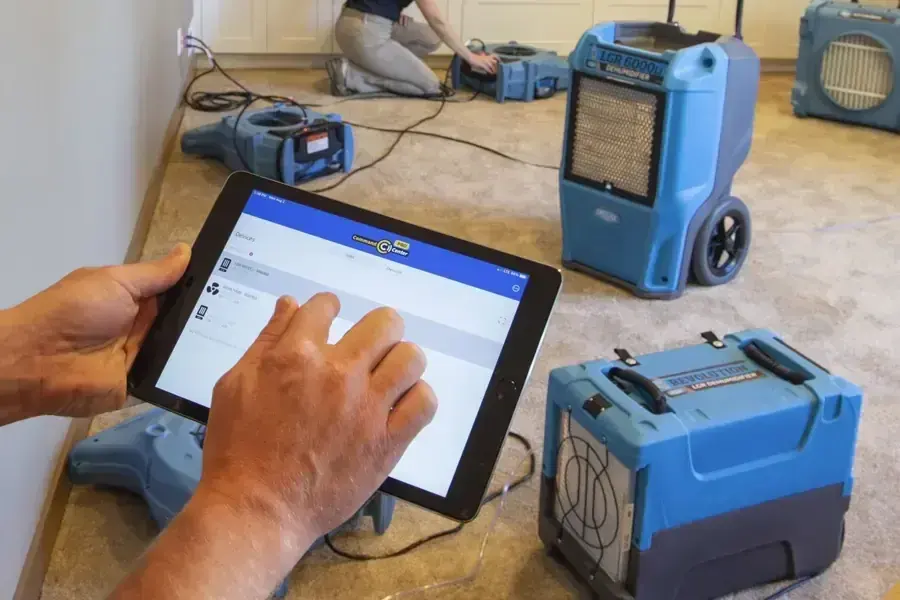
Only then does drying begin. The work moves from water extraction to measured drying, with the extraction crew and the drying team each doing their own part.
Moisture readings are taken before and after, so the record shows where the water went and when each material reached dry.
Drying through the wet months
About 75 percent of the city's rain falls between October and March, and the yearly average is about 44 inches. A lower level dries slowly in that air.
Dehumidifiers and air movers stay until readings in the slab edge, framing and drywall return to a dry reference. The end point is a number on a meter, not a date on a calendar.
Questions
Why do West Linn creeks back up?
When the Tualatin River or the Willamette River runs high, tributaries cannot drain into them. In February 1996 that left several creeks backed up and flooding nearby ground.
Does flood risk exist outside the mapped floodplain?
The city says it does, from small streams and from local drainage where open ditches enter culverts or storm sewers.
What does a check valve do?
A check valve lets water flow out through a drain but blocks it from flowing back in. The city suggests considering them so floodwater cannot back up into drains.
Is water from a backed-up drain clean?
No. It is treated as contaminated, so porous materials are removed and hard surfaces are cleaned and treated.
Where can residents get sand and sandbags?
The city keeps self-service sand and sandbags at Willamette Park and behind the old Bolton fire station on Failing Street.
What should be photographed after water backs up through a drain?
The drain, the water on the floor, the marks left on the walls and anything that was in the water. Photos should come before cleanup starts.