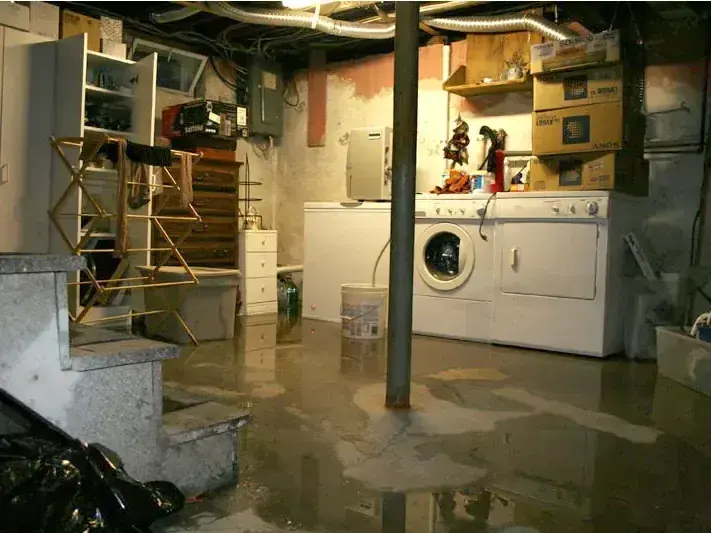
The flood of record on the Tualatin River came in February 1996, when floodwater rolled through much of downtown and filled the basement of the historic Winona Grange with about four feet of water. Later floods have been smaller, but the way river water behaves in a lower level has not changed.
Key takeaways
- In February 1996 some downtown streets were under as much as eight or nine feet of water, and a main road closed for several days.
- The river ran at about 25,000 cubic feet per second, against about 180 in a typical summer.
- A volunteer recalled that floodwater overwhelmed the sewer system at the Winona Grange, which is why river water in a lower level is treated as contaminated.
- Later floods came in December 2007 and December 2015, and in 2015 a stretch of Nyberg Road closed with no homes reported affected.
- Cleanup runs in order: water out, contaminated materials removed, then drying to a dry reference.
The 1996 flood in Tualatin
The city had already declared a state of emergency after a December 1995 windstorm. Snow, ice and freezing weather followed in January, and a warm Pineapple Express rain arrived in early February.
Then the river rose. Floodwater rolled through much of downtown, and the river crept up Boones Ferry Road on the northern edge of the district.
The numbers from that flood tell the story.
- Some streets were under as much as eight or nine feet of water, according to the city's operations director at the time.
- The city handed out about 20,000 sandbags before the flood.
- Tualatin-Sherwood Road was closed for several days.
- A Clean Water Services spokesperson put the river at about 25,000 cubic feet per second, against about 180 in a typical summer.
The Winona Grange basement
The historic Winona Grange stands downtown. In 1996 its basement filled with about four feet of water.
A volunteer recalled that floodwater overwhelmed the sewer system there. That detail matters, because river water and sewer water can arrive together in a flood.
Later floods in 2007 and 2015
Washington County lists significant Tualatin River flooding in December 2007 and January 1974 as well. In December 2015 the river flooded and closed a stretch of Nyberg Road, and KATU reported no homes were affected.
The county's list is a reminder that 1996 was the record, not the only event.
A flood does not have to match 1996 to reach a lower level. Smaller rises still push water into low spots, so the cleanup steps below apply at any size.
Why river water in a lower level counts as contaminated
River water carries soil, debris and whatever it picked up on the way. When a sewer system is overwhelmed too, as it was at the Winona Grange, sewage joins the mix.
Even a small flood is a mix of river water, runoff and sometimes sewage. Nobody can see that mix from the surface, so the cautious category is the right one.
A river flood also leaves silt. It dries into a film that holds moisture and odor, so it is washed off before drying equipment goes in.
Restoration standards place this water in Category 3, the most contaminated group. Porous materials that sat in it come out instead of being dried in place, which usually means the items below.
- Carpet, pad and insulation
- Drywall and trim along the bottom of the walls
- Particleboard cabinets and stored paper goods
- Anything soft that soaked up the water
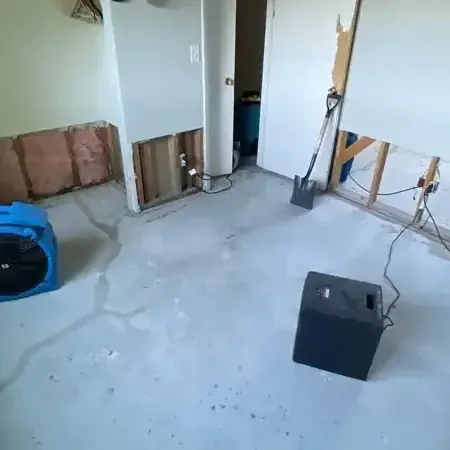
Cleanup, step by step
Not every house has a basement, so the plan starts with where the water went. A basement, a crawl space or a garage can all take river water, and the order of work is the same in each.
Speed still helps, because river water soaks into porous materials quickly and every added day makes the removal list longer.
Water out, in stages
When the ground outside is still saturated, pumping too fast can load walls and slabs from the outside. Crews often lower the water in stages and watch the level between steps.
Remove and clean
Basement flooding cleanup cuts out the porous materials, then cleans and treats hard surfaces. If sewage was part of the water, the steps in sewage backup cleanup apply as well.
Cleaning is not the same as rinsing. Surfaces are scrubbed or washed with cleaners and then treated, and the water used for cleaning is itself removed so the job does not add moisture.
Dry to a reference
Structural drying follows, with dehumidifiers and air movers. Rain in the Portland region is heaviest from late fall through spring, so drying often runs through damp months, and the readings decide the end date.
Particleboard, drywall paper and carpet backing react to water differently, so drying plans differ room by room. The meter, not appearance, shows whether a wall is ready to close.
Treat and verify
After cleaning, a treatment goes onto hard surfaces, and the crew checks the result with a final round of readings. A job is not done when surfaces look clean.
It is done when the numbers say so.
What to document in a flooded lower level
Records matter after any flood, and a lower level is the easiest place to lose them to silt and cleanup. Good notes also help the drying team see where the water traveled.
- Photograph the high-water mark on every wall before cleaning.
- Photograph each damaged item before it goes in a bag.
- Note the date the water came in and the date it was pumped out.
- Keep a list of anything removed, such as carpet, pad and drywall.
- Save any readings the crew takes.
Getting ready before the next rise
Preparation belongs to the owner, and the Tualatin water damage pros handle the cleanup when water gets in anyway.
Sandbags help at doors and low windows, and the city handed out about 20,000 before the 1996 flood. They slow shallow water, but they do not stop a river.
- Keep valuables and records off the lowest floor.
- Know where the main shutoff and the electrical panel are.
- Photograph the lower level now so later damage is easy to show.
- Watch river forecasts through the wet season.
Questions
When was the flood of record on the river?
February 1996. Floodwater rolled through much of downtown, and the river was at about 25,000 cubic feet per second.
What happened at the Winona Grange?
Its basement filled with about four feet of water in 1996, and a volunteer recalled that floodwater overwhelmed the sewer system.
Is river flood water in a lower level clean?
No. It is handled as Category 3 water, so porous materials come out and hard surfaces are cleaned and treated.
Did the December 2015 flood damage homes?
The river closed a stretch of Nyberg Road, and KATU reported no homes were affected.
How long does a flooded lower level take to dry?
Readings decide. Drying continues until framing, slab edge and drywall match a dry reference, and damp weather can stretch that.
What is Category 3 water?
It is the most contaminated group in restoration standards, covering floodwater from rivers and any water mixed with sewage. Porous materials that touch it are removed.