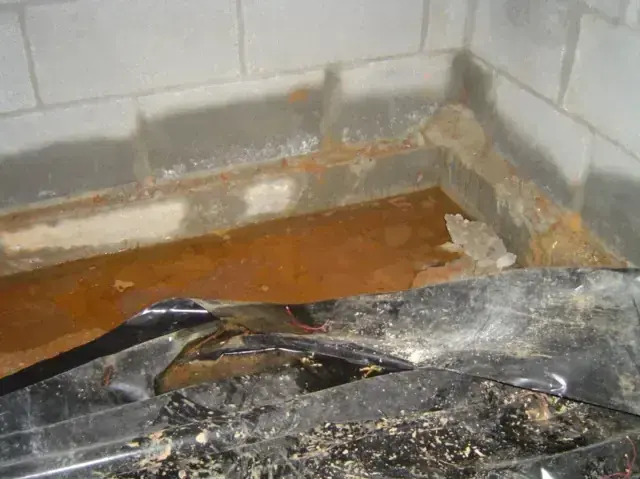
Most Lake Oswego homes went up between the 1960s and the 1990s, and most of them sit over a vented crawl space. That hidden space fills quietly in a long wet-season storm or when a supply pipe fails, and the first sign is often a musty smell or a soft spot in the floor above.
Key takeaways
- Standing water on the vapor barrier, dripping sounds or sagging insulation all point to a wet crawl space, and a flashlight from the access hatch is enough for a first look.
- Rain and a failed supply pipe look alike from the hatch, so the source comes first: if water keeps arriving, the main shutoff goes off.
- The cleanup runs in order. Water is pumped out, wet insulation comes down, and joists and subfloor are dried until readings match a dry reference.
- Foundation vents pull outside air in, and that air stays damp from October through April, so drying takes equipment rather than open vents alone.
- Photographs taken before anything is moved make the rest of the job easier to explain.
How water shows up under a Lake Oswego house
A crawl space hides its problems. Nobody walks through it, so water can sit on the ground cover for days before anything shows upstairs.
The wet season adds to it. Rain falls mostly from October through April here, and long atmospheric-river storms keep the ground wet for days at a time.
Neighborhoods differ, but the basic setup repeats: a floor held up by joists, a layer of insulation between them and a plastic ground cover over soil. When one layer fails, the others usually show it.
Signs from inside the house
- A musty smell near floor registers or in a ground-floor closet
- One patch of floor that feels cool, springy or slightly soft
- Baseboards or cabinet toe kicks that look swollen
- Hardwood that cups or opens gaps with no other explanation
Signs from the access hatch
- A sheen of water on the vapor barrier or the soil
- Insulation hanging down between the joists
- Dripping or trickling sounds when nothing is running
- Fresh wet marks on pipes, hangers or the underside of the floor
Telling rain water from a failed pipe
The right fix depends on where the water starts. Runoff tends to arrive after a storm and gather at the low corner, while a pipe leak can begin in any month and keep adding water.
Local homes have copper supply pipe in most cases, galvanized pipe in the oldest houses and polybutylene in some builds from the late 1970s to the mid 1990s. Whatever the material, supply pipes under the floor sit in damp air and are exposed in a hard freeze.
A third possibility is a drain pipe from a bath or kitchen that has split or come loose. That one adds a sour smell to the moisture and often leaves a wet patch directly below the fixture.
A quick sorting test helps tell the three apart.
- Turn off every fixture and appliance, then watch the water meter. A moving dial points to a pipe.
- A drip that continues for days without rain points to a supply or drain pipe.
- Water that showed up after heavy rain and then stopped spreading points to runoff.
What to shut off and what to leave alone
Safety comes before the pump. Wiring, ducts, a furnace or a water heater can hang under the floor, and standing water changes how risky that space is.
- Close the main water valve if a pipe is the suspect.
- Stay out of the crawl space while water covers the ground and wiring or equipment is within reach.
- Do not run a household vacuum or a plug-in fan over wet ground.
- Keep children and pets away from the hatch.
- Photograph the water, the insulation and any stained pipes before anything is moved.
What the crew does first
The order of work matters, because wood keeps absorbing water for as long as it stays wet.
Water out
Pumps go to the low point, and hoses run out through the hatch. Water extraction comes first because joists, insulation and subfloor keep pulling in moisture while the pool sits there.
Wet insulation out
Insulation that sags has already soaked up water and stopped doing its job. It is pulled down, bagged and carried out.
The ground cover is then checked for tears and low spots, because the place where water gathers shows how it got in. This is the core of crawl space water removal.
Joists and subfloor
Wood framing is tested with a moisture meter at several points, and the wet zones are mapped so the equipment goes where it is needed.
What else gets checked under the floor
Water is the obvious problem, but it is rarely the only one. The crew looks at everything that shares the space, because wet framing, ducts and pipes tend to go together.
The checklist covers these items.
- Ductwork that has sagged, come apart or taken on water
- Insulation wrapped around pipes
- Wiring and junction boxes near the wet area
- Posts, piers and beams that touch the ground
- Seams in the ground cover that have opened or lifted
What happens with the findings
Findings go into the job notes, so the homeowner and the repair crew work from the same picture.
Anything unsafe, such as wiring hanging low over wet ground, is flagged for an electrician before the space is used again.
Drying a vented crawl space in the wet season
Foundation vents are meant to let air move, but from October through April that air is damp. Opening them does little when the outdoor air holds as much moisture as the wood.
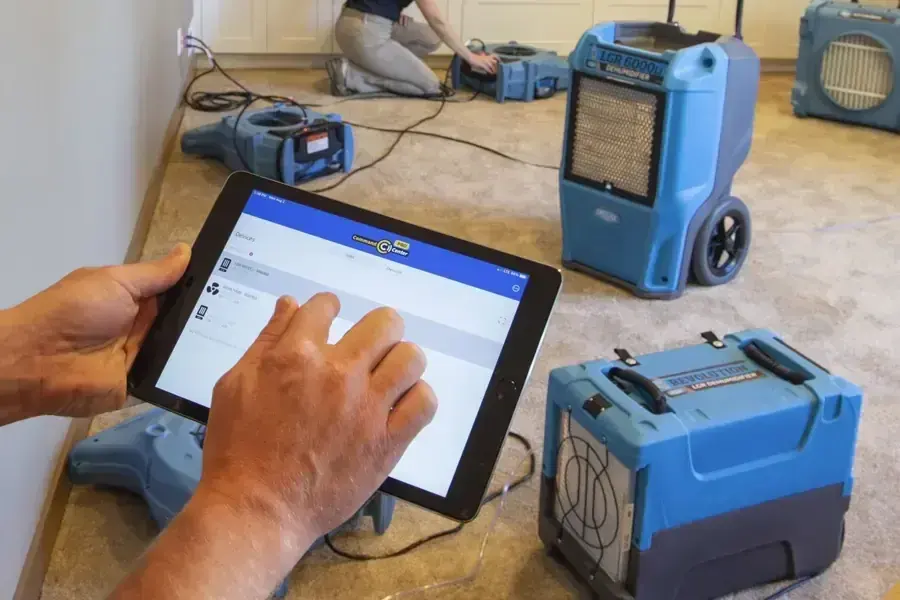
Equipment dries the space in a controlled way, and structural drying continues until readings on joists and subfloor match a dry reference.
- Dehumidifiers pull water vapor out of the air under the floor.
- Air movers push dry air across the framing.
- Readings are repeated, and the equipment stays until the numbers settle.
Habits that help before the next storm
A wet crawl space often has a pattern behind it, and a few habits make a repeat less likely.
- Keep gutters and downspouts clear. Moss clogs gutters and sends roof water down the foundation.
- Look through the hatch after every big storm.
- Keep foundation vents clear of leaves and debris.
- Check exposed supply pipes for rust or weeping after a cold snap.
Questions
How can a homeowner tell standing water from damp air under a floor?
Standing water shows as a sheen on the vapor barrier or soil and can often be heard. Damp air leaves a musty smell and beads of moisture on pipes and ducts, but nothing pools.
Should a homeowner crawl in to look?
A look from the hatch with a flashlight is enough for a first check. Standing water plus wiring or equipment makes going in a poor idea.
Does the insulation have to come out?
Insulation that has sagged or soaked through is normally removed, because wet insulation holds water against the joists and cannot dry in place.
Can fans and open vents dry the space on their own?
Rarely in the wet season. The outdoor air is damp, so dehumidifiers and air movers do the real work.
What if the water came from a pipe?
Close the main shutoff first. The pipe repair is plumbing work, and the water removal and drying run alongside it.
How long can water sit before it causes lasting damage?
Wood and insulation start absorbing right away, and the longer water stays, the more of the structure needs drying. Mold growth is one of the main reasons drying should start as early as possible.