Heavy rain pushed Gladstone's sewer system to overflow on December 7, 2015, and very heavy rain did it again on February 5, 2017, with Clackamas River advisories after each event. Those were overflows at a city outfall, which is a different event from sewage coming up through a drain inside a house.
Key takeaways
- An overflow is sewage leaving the public system at an outfall, while a backup is sewage coming up through a drain inside a building.
- The records for December 7, 2015 and February 5, 2017 describe overflows and Clackamas River advisories, not sewage inside homes.
- Clackamas County explains inflow and infiltration as rainwater or groundwater entering sewer pipes through improper connections or damaged pipes, which raises overflow risk.
- Any backup inside a house is Category 3 water, and porous materials that touched it are removed.
- Gurgling drains, rising water in a tub or floor drain and a sewer smell are signs to act on.
Overflow and backup are different events
An overflow happens outdoors. A sewer system carrying more water than it was built for releases the excess at an outlet, and in Gladstone's storms the city issued Clackamas River advisories afterward.
A backup happens indoors. Sewage or dirty water comes up through a toilet, tub or floor drain and spreads across the floor.
The public record for Gladstone's storms describes overflows and river health advisories. It does not describe sewage inside homes, and nothing here suggests otherwise.
In short, the two events differ like this.
- Overflow: outdoors, at an outfall, in the public system
- Backup: indoors, at a drain, inside a building
The overflows on record
Two of the three records point to the same intersection, Portland Avenue at West Clackamas Boulevard.
December 2015
Heavy rain pushed the sewer system to overflow at Portland Avenue and West Clackamas Boulevard on December 7, 2015, and the city issued a health advisory for the Clackamas River.
Police posted warning signs about bacterial contamination, and people were asked to avoid the river water for at least two days after the storm ended. A report dated December 22, 2015 describes another overflow of raw sewage and a second advisory.
February 2017
On February 5, 2017, very heavy rain overtaxed the wastewater and stormwater systems. Raw sewage was discharged at the stormwater outfall at the south end of Portland Avenue at West Clackamas Boulevard.
Residents were told to avoid contact with the river for several days.
Why rain pushes sewers past their limit
Clackamas County describes inflow and infiltration as rainwater or groundwater that enters sewer pipes through improper connections or damaged pipes. The extra water raises the risk of sewer overflows.
Overflows at outfalls and backups into houses are separate problems with a shared cause, which is too much water in pipes sized for less.
The city has a multi-year plan to reduce it. The West Clackamas Boulevard Sanitary Sewer Project was engineered to correct restricted flow in an existing sewer pipe, the 2026 Sanitary Sewer CIPP Project is the next phase, and a final phase in the East Basin was expected to begin construction in December 2025.
Why the confluence matters
The city sits where the Clackamas River and the Willamette River meet. On December 18 and 19, 2025, an atmospheric river pushed the Clackamas River at Estacada to 26.25 feet, above the 25.52 feet reached in 1972, and the city asked people to stay back from the river.
High rivers and heavy rain tend to arrive together, and they stress the same pipes, outfalls and drains. That is why the sewer events and the river advisories belong to one local story.
Signs of a backup inside a house
A backup often announces itself before the floor is wet. These signs deserve action even after the rain stops, because a blocked or overloaded pipe can push water back up again.
A backup is usually worst at the lowest drain in the house, because that is where pressure and gravity push the water out first.
- Toilets that gurgle when a sink or washer drains
- Water rising in a tub, shower or floor drain
- Several fixtures draining slowly at the same time
- A sewer smell near a utility room or lower level drain
- Dirty water on the floor around a drain
What Category 3 cleanup involves
Water that comes up from a sewer is Category 3, the most contaminated group in restoration standards. That sets the pace and the safety steps.
Contain and protect
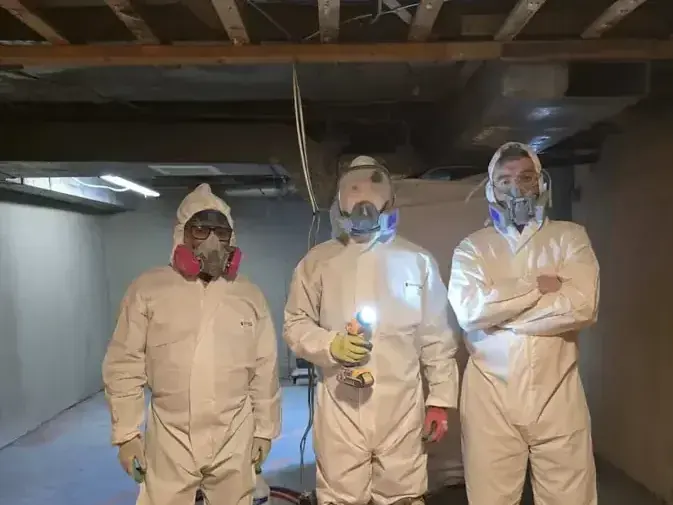
Crews wear protective suits, gloves, boots and respirators, and family members and pets stay out.
Plastic sheeting separates the affected room from the rest of the house, and an air scrubber keeps dust and odor from moving into clean areas.
Remove
Standing sewage is pumped out. Carpet, pad, insulation and drywall that touched it are cut out and bagged, because porous materials cannot be made safe again.
This is the heart of sewage backup cleanup.
The removal list is long because sewage soaks in, and anything that cannot be washed to a safe level has to go. That usually includes these items.
- Carpet and pad
- Drywall and trim that were wet
- Insulation
- Soft contents such as mattresses and upholstered chairs
Clean, treat and dry
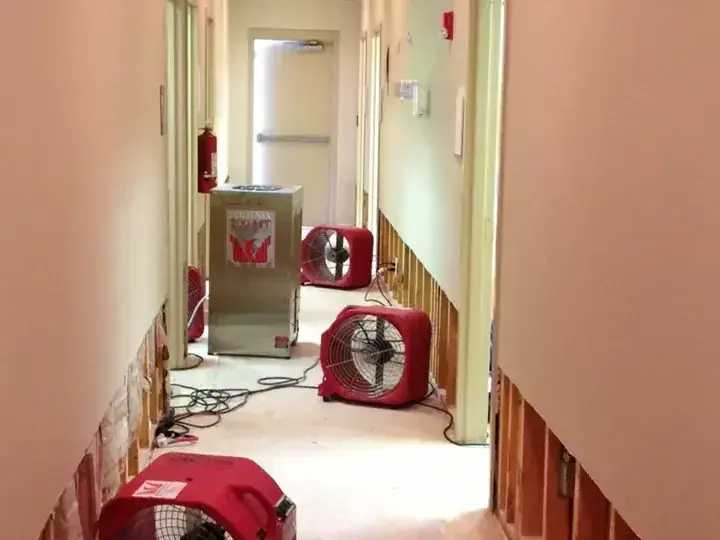
Hard surfaces are cleaned and treated, and structural drying follows until readings show a dry reference.
Why the dry reference still matters
Even after surfaces look clean, framing and subfloor can hold moisture. The dry reference matters as much after a sewage job as after any other water loss.
Who handles which part
On December 19, 2025, the city posted a Public Works contact for localized flooding or sewer overflows. Problems at a street, an outfall or the public sewer belong with Public Works.
Inside the house, the cleanup crew handles the water, the removal and the drying. The Gladstone restoration team takes it from the floor drain onward.
The county matters later. The city contracts with Clackamas County for building permits, including plumbing, and private drainage permits are issued through the Clackamas County Building Department, so a repair to private drainage should start with a question to that office.
Photographs and notes help every party: the date, the drains involved and the rooms affected.
Questions
Is a sewer overflow the same as a sewage backup?
No. An overflow is sewage leaving the public system at an outfall. A backup is sewage coming up through a drain inside a building.
Did homes in Gladstone have sewage inside in 2015 or 2017?
The records describe overflows and river health advisories, not sewage inside homes, so nothing here suggests otherwise.
What is inflow and infiltration?
Clackamas County defines it as rainwater or groundwater that enters sewer pipes through improper connections or damaged pipes. It raises the risk of sewer overflows.
Why can carpet not be saved after a sewage backup?
Carpet and pad absorb contaminated water and hold it. They cannot be cleaned to a safe level, so they are removed.
What should a homeowner do first when a drain backs up?
Stop using water in the house, keep people and pets out of the wet area, and photograph the floor. Cleanup should start before the water soaks further into floors and walls.
Is a chemical drain cleaner a good idea when a drain is backing up?
Chemical cleaners can splash and mix with contaminated water, so they are a poor choice. A plumber clears the blockage, and cleanup deals with whatever has already spilled.